

Frenchman Street: The Other Side of Bourbon
Bourbon Street is where you start. Frenchmen Street is where New Orleans actually lives. Here's how to soak up the right side of town.


There's a moment, somewhere around the 600 block of Bourbon Street, when a reasonable person begins to wonder if they've made a mistake. Not about New Orleans — New Orleans is magnificent — but about this part of it, where a man in a light-up sombrero is aggressively selling you a drink served in a plastic grenade, and four competing cover bands are murdering songs you were already tired of in 2009.
This is the moment to walk away.
Not in defeat. In wisdom.
Head toward Esplanade Avenue, leave the French Quarter behind you like a fever breaking, and keep walking until the streets narrow, the oak trees thicken, and the music changes from something performed at you to something simply happening. You'll smell the river before you see it. You'll hear a trumpet — a real one, played by someone who learned this music the way you learn a language when you actually live somewhere — and then, almost without announcement, you'll arrive.
Frenchmen Street.
If Bourbon Street is New Orleans performing for the camera, Frenchmen Street is New Orleans forgetting the camera is there. The bars open onto the sidewalk. The music spills out rather than being piped in. Nobody is wearing a lanyard.
From here, two neighborhoods radiate outward like the best kind of secret — the Marigny to your left, a compact grid of Creole cottages painted in colors that would be garish anywhere else and are somehow perfect here, and Bywater beyond it, looser and larger and funkier, the kind of place where a converted warehouse becomes a world-class art gallery and a backyard becomes the best wine bar in the city without anyone making a particularly big deal about either.
This is where you spend your time. This is where New Orleans lives when it isn't working.
Into the Neighborhood
The Marigny wakes up slowly — either one of its better qualities or a collective hangover, and here the distinction isn't pursued with much urgency. The cats who slept on the stoops the night before are still technically on duty. The Creole cottages stay shuttered a little longer than they probably should. The whole neighborhood operates under a quiet civic agreement that whatever needs doing will get done eventually and almost certainly better after coffee.
Find that coffee at Ayu Bakehouse, 801 Frenchmen St., where the "Boudin Boy" — a pastry that sounds like it was named during a fever and tastes like it was perfected during a decade of very focused effort — has acquired the kind of devoted following that other cities reserve for sports franchises and regional fast food chains. Order one. Then, before you've finished it, order another, because the moment you don't is the moment you'll spend the rest of the trip thinking about it.
From here, walk deeper into Bywater, which opens gradually the way a good conversation does — the Marigny's tightly packed cottages giving way to something larger and more industrial at the edges, warehouses repurposed with varying degrees of ambition, corner stores that have survived everything the city has thrown at them and seem faintly smug about it, shotgun houses painted colors that exist nowhere in nature and somehow feel inevitable here. There is a particular New Orleans architectural philosophy that holds that if a color makes you slightly uncomfortable, you probably haven't committed to it enough. Bywater has committed.
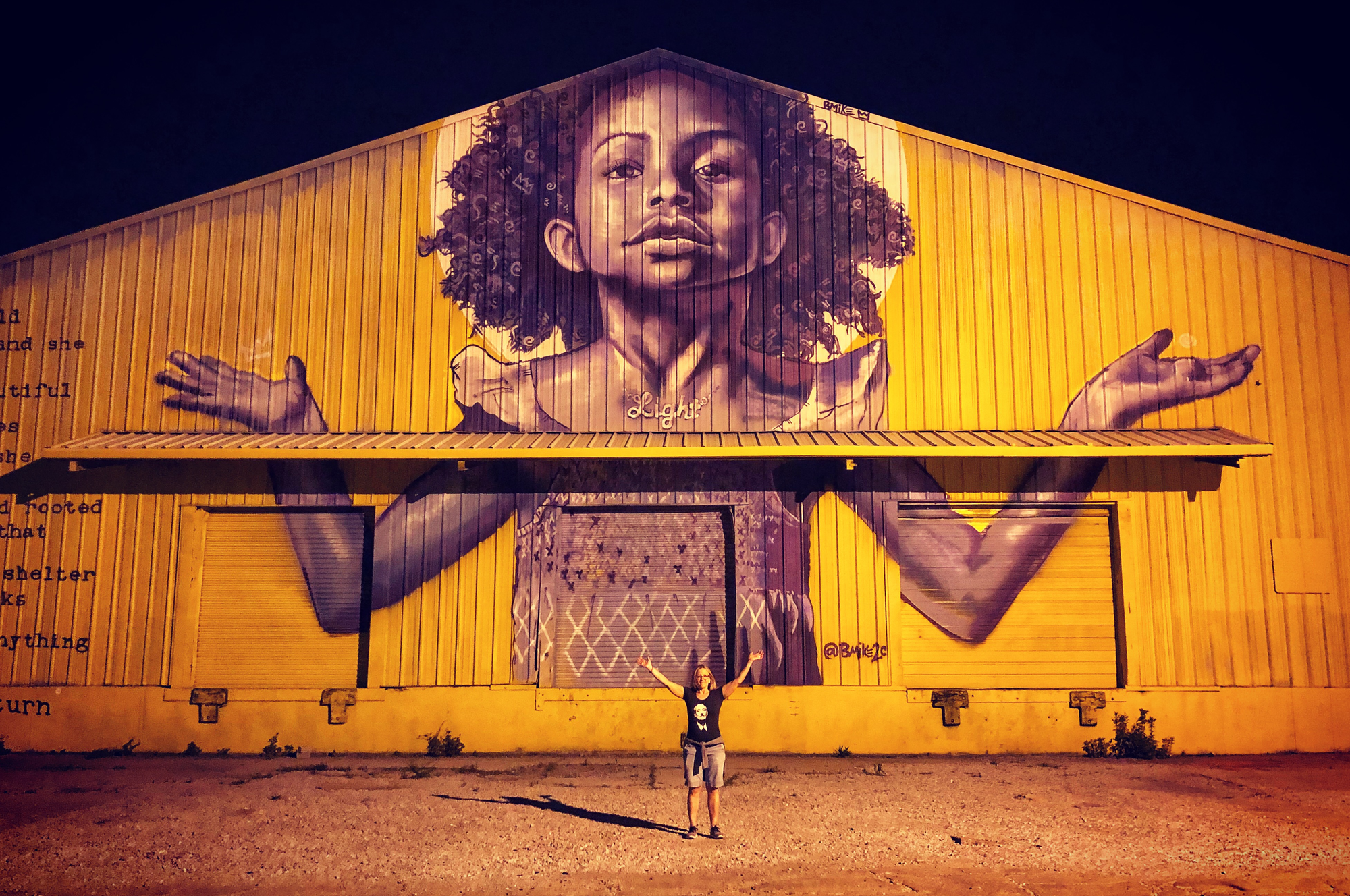
Make your way to StudioBE, 2360 Royal St., the massive warehouse gallery housing the social justice murals and immersive installations of Brandan "B-mike" Odums. You'll walk in with the confidence of someone who's been to galleries before and leave an hour later slightly rearranged in ways you won't fully process until you're home trying to explain it. This is among the highest compliments that can be paid to art, and StudioBE earns it without apparent effort.
Before lunch, let the river pull you toward Crescent Park, 2300 N Peters St., where the Mississippi reveals itself at a scale that resets your sense of proportion in a way that's either humbling or alarming depending on your relationship with large, indifferent bodies of water. The "Rusty Rainbow" pedestrian bridge arches into the park with the particular confidence of infrastructure that wasn't designed to be beautiful and became beautiful anyway — which might just be a good bridge. Sit here long enough and New Orleans makes a different kind of sense than it does from inside the French Quarter — quieter, larger, and considerably less interested in your opinion of it.
Lunch is a problem, in the best sense. The Joint, 701 Mazant St., is a BBQ operation of almost aggressive modesty — short menu, unpretentious room, ribs that have been written about in publications that don't normally write about ribs — and Alma Cafe, 800 Louisa St., is Chef Melissa Araujo's James Beard-nominated celebration of Modern Honduran cuisine, which deserves more than a passing mention, but you have places to be. If your group cannot agree on where to eat, split up. Both choices are correct. Reconvene afterward and lie to each other about which was better. This is what travel companions are for. Or, if your morning got away from you and lunch has quietly become brunch, Elizabeth's, 601 Gallier St., has been serving praline bacon to people who didn't know praline bacon was something they needed until the moment it arrived. It remains one of those dishes that makes you briefly question every breakfast decision you've made up to this point.
Afternoon: Vinyl, Wine & the Wander
The afternoon belongs to wandering with selective purpose. Euclid Records, 3301 Chartres St., occupies two floors of vinyl organized with the particular logic of a record store that knows exactly where everything is and trusts that you'll figure it out eventually. You went in looking for one thing. You will leave with four things. None of them will be the thing you went in for. This is the correct outcome. Down on Frenchmen, Louisiana Music Factory, 421 Frenchmen St., specializes in jazz, blues, Cajun, and the beautiful collisions between them. Buy something physical. A record, a CD, something with weight and artwork. In six months, when you put it on at home, you will be briefly and completely back here, which is the entire point of souvenirs and the reason most souvenirs fail at it.
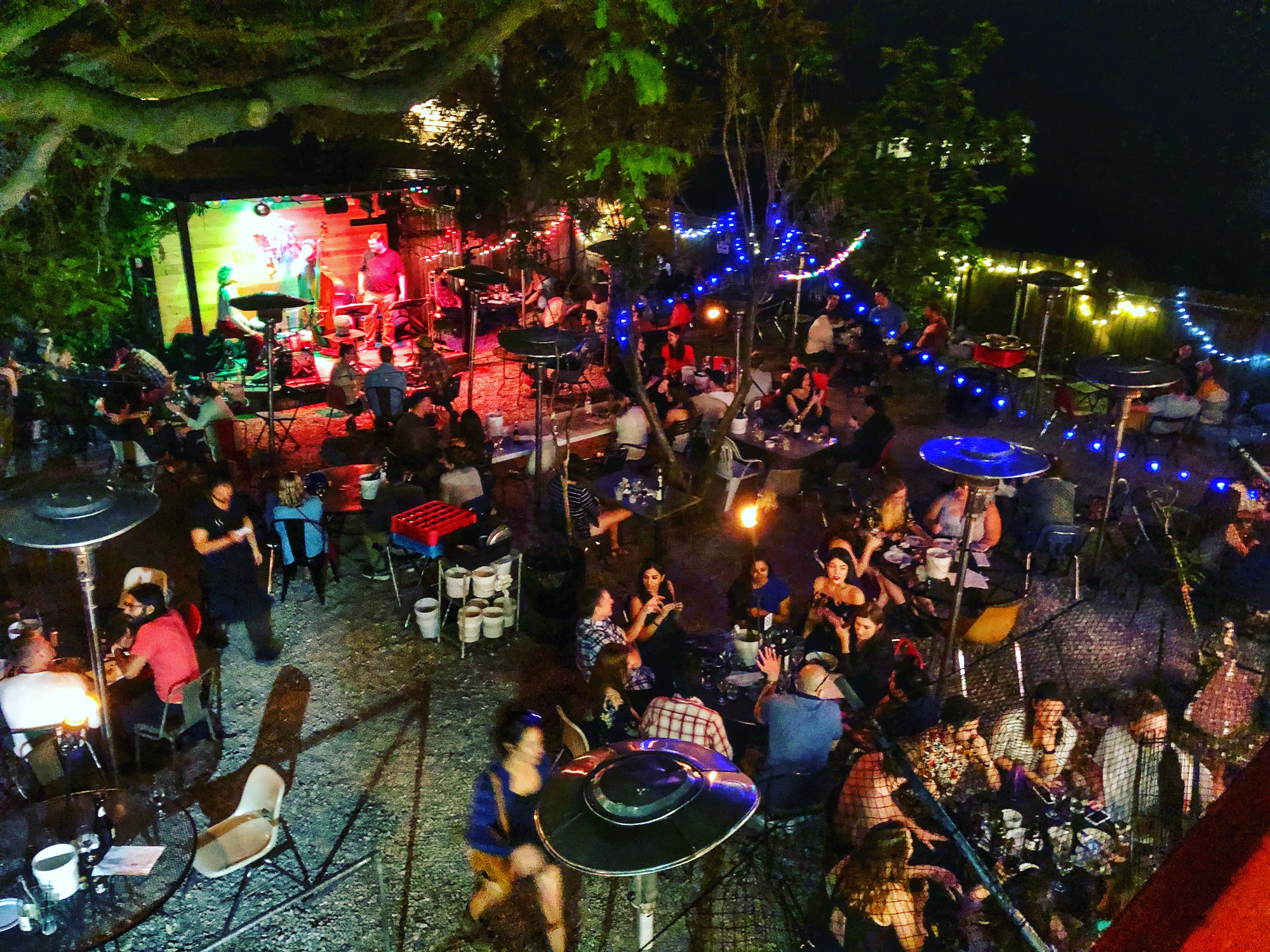
By late afternoon, Bacchanal Wine, 600 Poland Ave., has stopped being optional. What presents itself from the street as a modest wine shop reveals, through a back door, an expansive backyard strung with lights and animated by live music and populated by people who have clearly made a series of excellent decisions today. The cheese plates are exceptional. The wine list is deep and honestly priced. The cumulative effect — warm air, good wine, music that floats over everything without demanding your attention — produces a specific variety of contentment that is very difficult to replicate at home and very easy to spend an irresponsible amount of time pursuing here.
Evening: Dinner & the Decision
As evening settles in, the neighborhood presents a choice that functions as a mild personality test. The Elysian Bar, 2317 Burgundy St. — installed inside a converted convent with the kind of interior that makes you feel you've wandered into a very glamorous fever dream hosted by people with significantly better taste than you — offers small plates and cocktails in a room so beautiful that spending the first ten minutes looking around is common. The staff has seen this before. They are patient about it. Alternatively, NightBloom, 3100 St Claude Ave., is a plant-filled cocktail bar where the bitters program alone justifies the visit, for those who prefer their evenings to feel like a greenhouse that developed strong opinions about spirits, which turns out to be a surprisingly appealing combination.
Dinner means choosing between N7, 1117 Montegut St. — canned seafood and French-Japanese fusion in a hidden courtyard so romantically lit that you will feel compelled to be more interesting than you actually are, which is either charming or exhausting depending on who you've brought with you — and Bywater American Bistro, 2900 Chartres St., where Chef Nina Compton does something that sounds straightforward and turns out to be genuinely extraordinary: she cooks neighborhood food for the actual neighborhood, with a refinement that never tips into self-consciousness. Pick one. Spend the evening quietly convinced the other was probably also excellent. Return someday to confirm this suspicion, which you will.
Frenchmen Street at Night
And then, because the whole evening has been pointing here without making a fuss about it, Frenchmen Street at night.
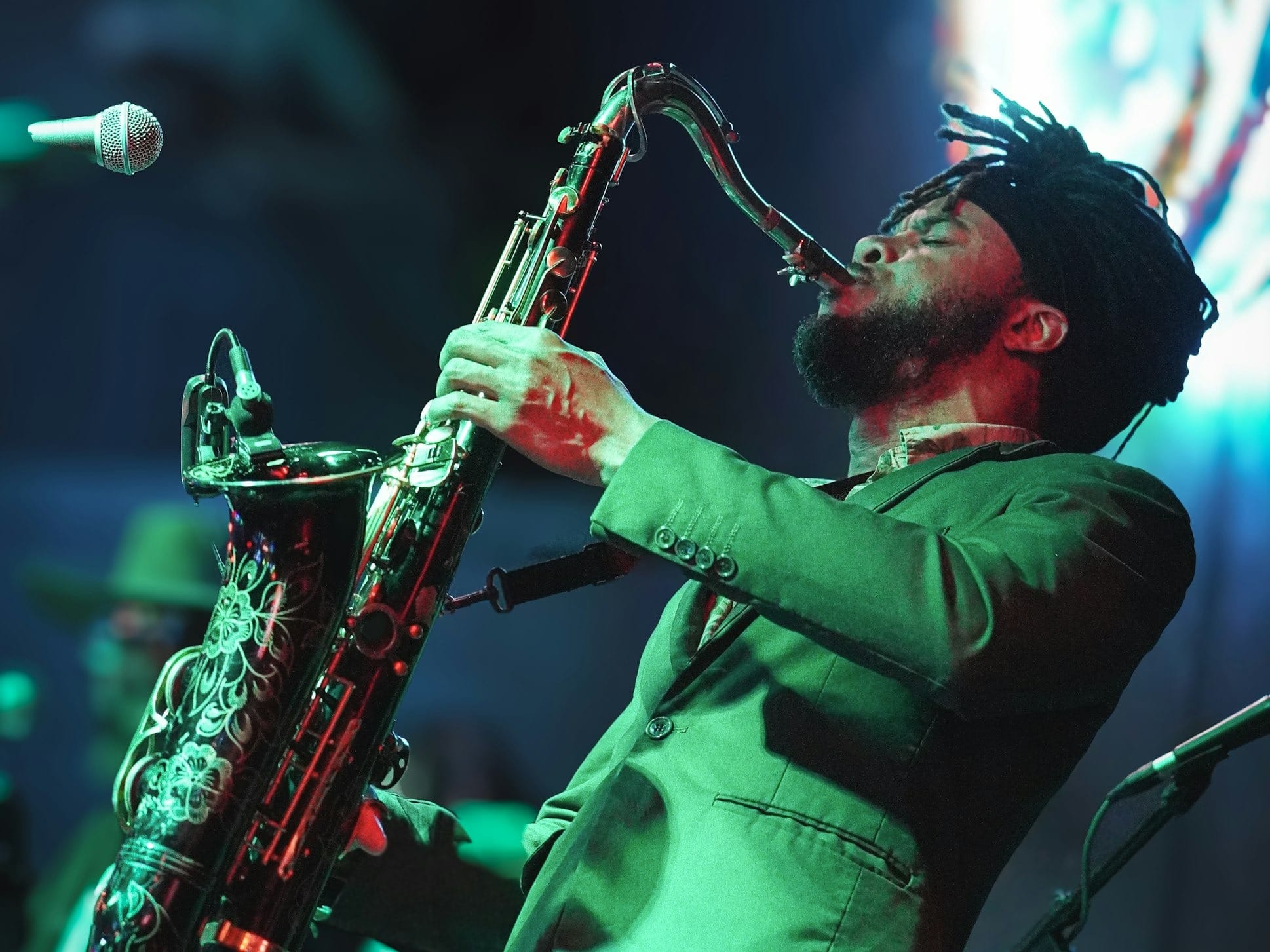
The Spotted Cat Music Club, 623 Frenchmen St., is the gold standard — traditional jazz played with genuine ferocity in a room that holds perhaps a hundred people, provided everyone agrees to be collegial about personal space, which they usually do. There is no cover charge, which seems like an administrative error given what's happening inside, but has persisted long enough to be considered policy. There is a two-drink minimum, which seems not only fair but frankly conservative. If the line out front suggests a wait — and it might — walk twenty steps to Apple Barrel, 609 Frenchmen St., order a beer, and recalibrate your expectations in the best possible direction. Musicians occupy a corner with the quiet authority of people who were there before the room existed and will be there after it's gone. The bartender is not interested in your opinion of the music. It has been doing this longer than you've been paying attention, and the lack of mutual concern turns out to produce something rather wonderful.
For the listener who prefers intention over atmosphere, Snug Harbor Jazz Bistro, 626 Frenchmen St., offers ticketed shows in a dedicated room where the acoustics are serious and the audience behaves accordingly — the right choice when you want to actually hear rather than simply be present while something extraordinary happens around you, which is a legitimate distinction that more people should make. d.b.a., 618 Frenchmen St., runs an eclectic enough lineup — brass bands, singer-songwriters, the occasional act that resists categorization entirely — that it functions as the street's most reliable wild card, which every good block needs and few manage to sustain.
Outside all of it, the Frenchmen Art Bazaar, 619 Frenchmen St., sets up nightly with local jewelry, art, and crafts arranged with just enough care to feel intentional and just enough looseness to feel like a genuine market rather than a retail experience wearing a market's clothing. Buy something small. Something handmade and specific to here. You'll know it when you see it.
Stay as long as the music holds you. In this neighborhood, on this street, that arithmetic tends to work out significantly in the music's favor.

The Walk Back
At some point — not because the music stops but because something in you quietly does — Frenchmen Street releases you. You find yourself on the sidewalk at an hour you'd normally find inexcusable, feeling more oriented than you've felt all trip. Which is, on reflection, exactly right.
The Marigny and Bywater disorient you first, then hand you back to yourself in better condition than you arrived. It happens somewhere between the second glass of wine at Bacchanal and the moment the trumpet player at the Spotted Cat does something that makes the entire room go briefly silent.
You walked away from Bourbon Street. Best decision you made all trip.
The walk back feels different than the walk out. Bourbon Street will reassemble itself ahead of you — the lights, the noise, the man in the sombrero, possibly the same one as yesterday — and you'll move through it with the quiet confidence of someone who knows where the better party was.
You were just there. You stayed long enough to feel it.
That's the whole idea.
